
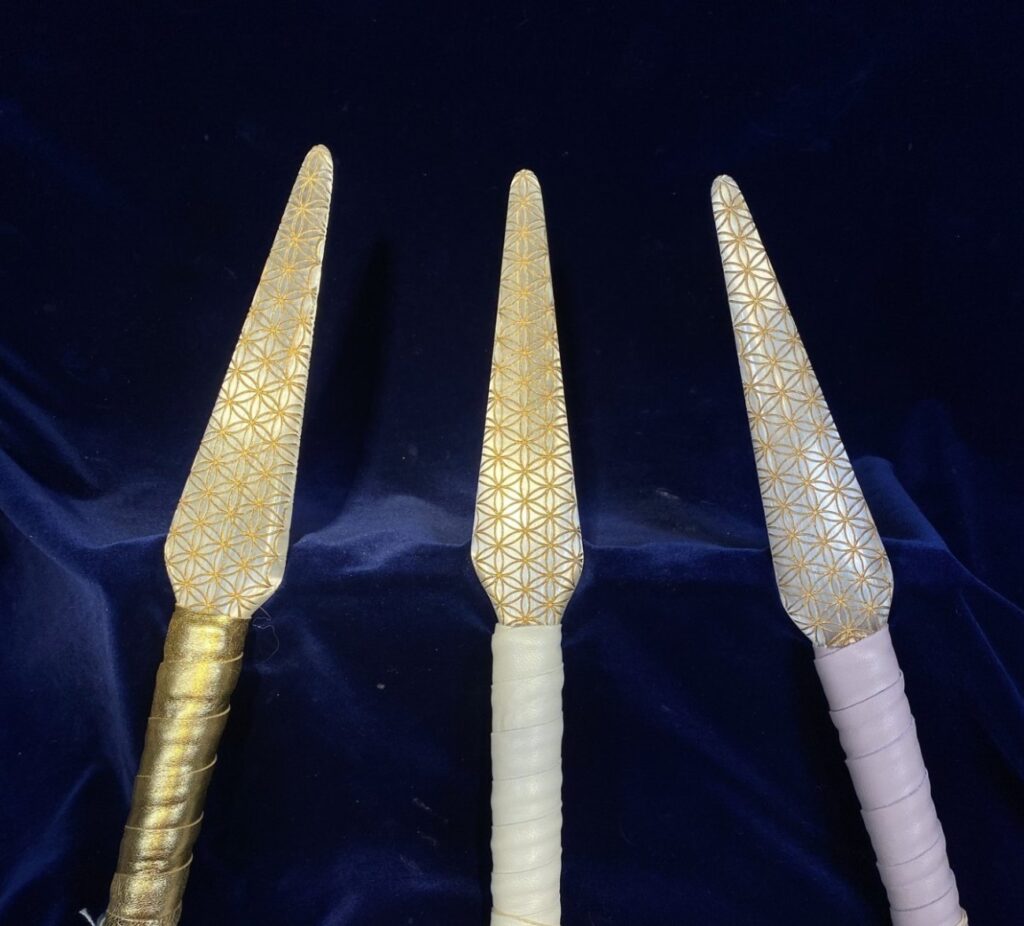
Most crystal tools are one material shaped into a form. These are not that.
A Selenite Sword of Light is an assembly — a blade of one mineral rising from a handle that holds several hundred others, each chosen and placed. It takes a long time to make one. That is the point of it.
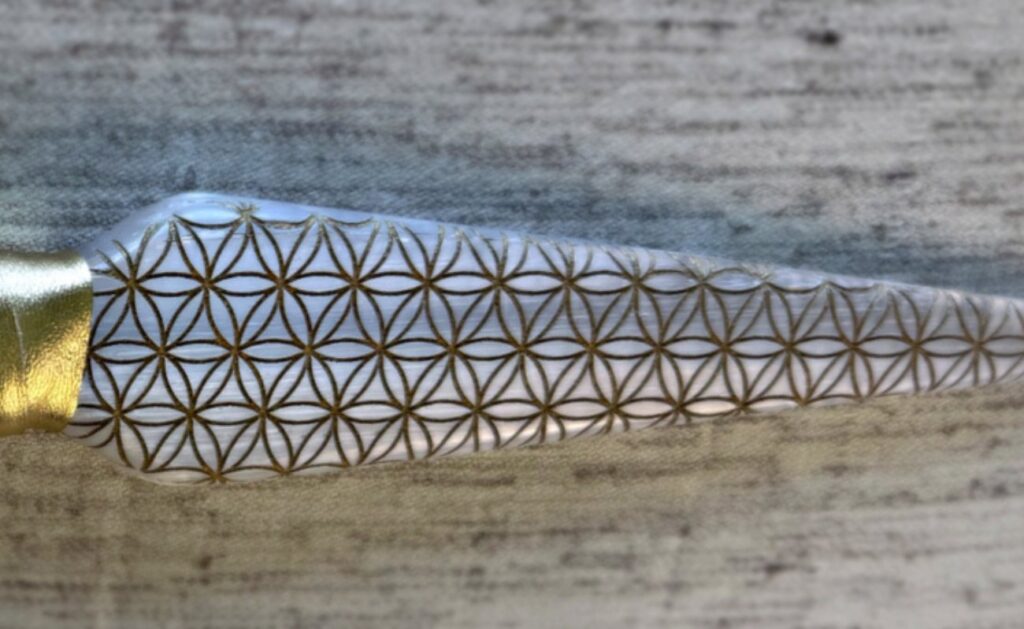
Selenite
Selenite is a crystalline form of gypsum. It is soft — you can mark it with a fingernail — translucent, and it carries light along its length in a way few minerals do. Held up, a good blade glows rather than shines.
It is also, being gypsum, water-soluble. That single fact governs everything on the care page, and is the most important thing to know before you own one.
The alchemical matrix
Set into selenite powder and bound solid:
- Over 400 crushed power crystals — the base of the matrix
- Seven meteorites, carrying extraterrestrial mineral signatures
- Sacred volcanic material
- More than 100 sacred waters, gathered from Mount Kailash, the Ganges, Mount Shasta, Mount Fuji, Koyasan, Antarctica, and the Celtic wells
- Eighteen star elixirs and seven planetary elixirs, sourced by the Pegasus telescope array
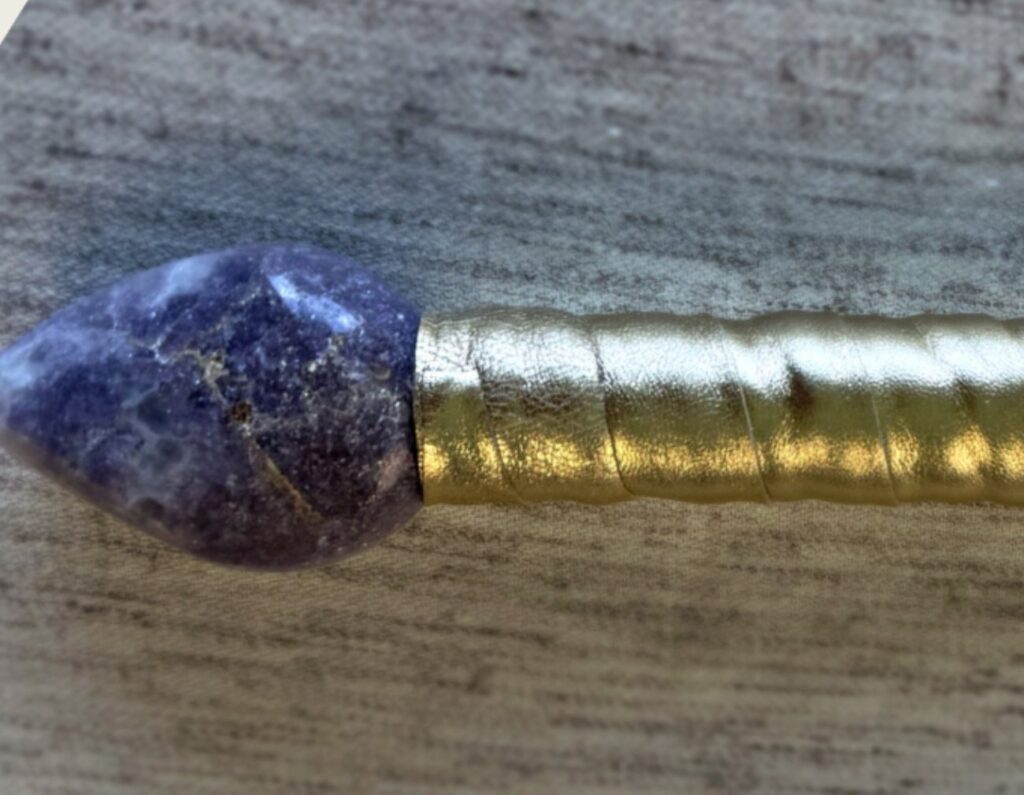
Some handles carry a named stone at the flame or the pommel — a ruby zoisite, a trolleite, a tourmalinated quartz, a Lemurian point. That stone is usually what the sword is named for.
How practitioners work with them
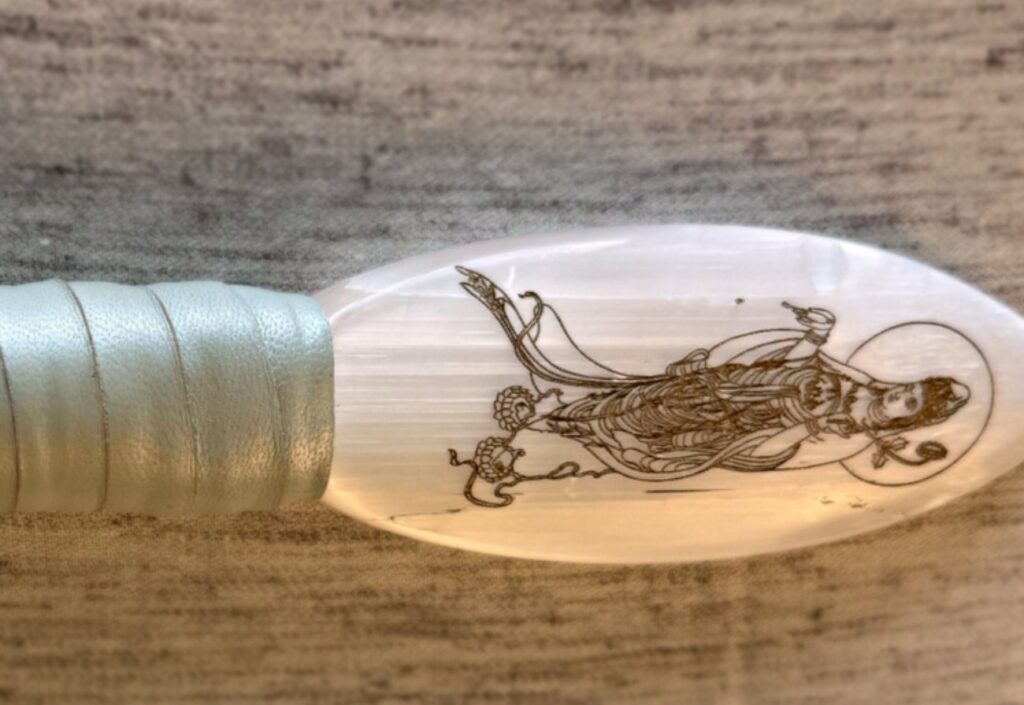
Practitioners describe using the swords in ceremony, in partner practice, and in their own daily work. In the trainings, most of the hands-on time is spent in pairs — one person holding, one person receiving — which is how most people get a sense of the thing.
We’re not going to tell you what you’ll experience. Practitioners’ accounts differ, and the useful ones are specific to the person. If you want a sense of the range, the testimonials on Tom’s site are worth reading, and the training in October is two days of finding out directly.
One at a time
Each sword is assembled by hand from one-off materials, so no two are the same. What we have in stock is what we have — these arrive in small numbers and slowly. They are collector’s instruments, made to be kept, and to be handled with the care a soft mineral asks for.